
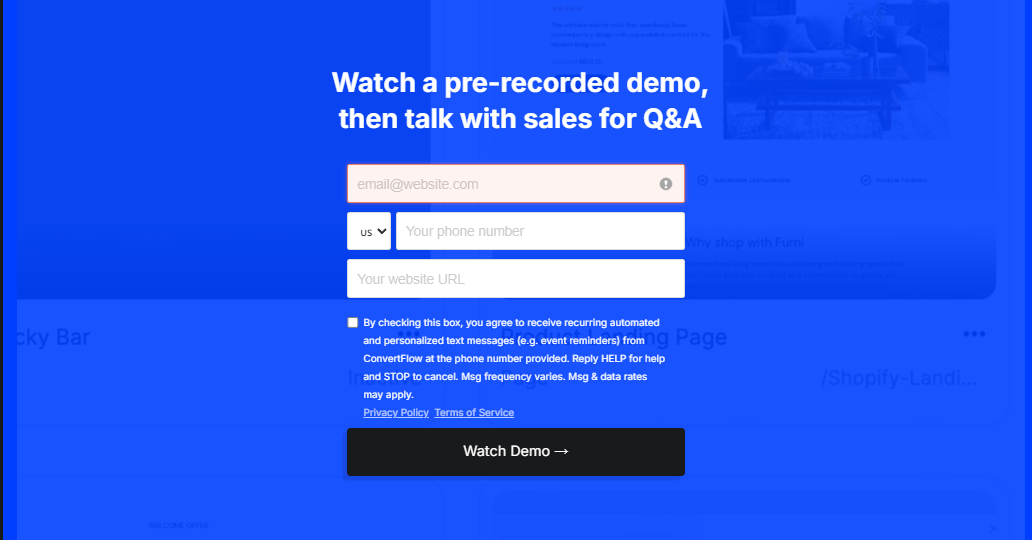
We’ve all been there as consumers: you click on an intriguing link and—bam—up pops a form. Name. Email. Company. Phone. Do you fill it out, or back out and Google the next result?
That moment captures the tradeoff of gating content. Done well, it accelerates your sales process. Done poorly, it quietly shrinks your audience and dampens your thought leadership.
First, what do we mean by “gated”?
“Gated content” is any resource that requires someone to share information (usually an email address) before accessing it. The form controls access and, in exchange, gives the business a way to follow up. Common examples include eBooks, checklists, ROI calculators, webinars, and research reports—anything with enough perceived value that a visitor would reasonably trade their contact info to get it.
The case for gating
When a prospect trades contact information for your content, they’re saying: this topic matters to me right now. That signal can start a conversation, qualify interest, and shorten the path to sales. If your sales cycle is long or consultative (manufacturing, professional services, etc.), the first volunteered datapoint is gold.
Gating makes the most sense for:
- Consideration and decision-stage resources: ROI calculators, pricing explainers, RFP templates
- Event registrations and webinars
- Original research or highly proprietary material
The case against
Forms add friction, and some people won’t cross the gate. They’ll bounce to a competitor with similar ungated insight. Gated pieces also don’t spread as easily, limiting reach and backlinks. If your best thinking lives behind forms, the market may never experience it. Authority is built in public.
Keep the gates off for:
- Perspective pieces and educational how-tos
- Category explainers and early-journey content
- Customer stories
- SEO cornerstone pages
A practical middle path
You don’t have to choose all-or-nothing. Try a soft gate: let visitors read 60–80% of a piece, then offer the full PDF via email. Or publish the article openly and offer a designed downloadable version behind a form. Low-friction CTAs like “Get this as a PDF” inside the content work well, too.
A quick rubric before you gate anything
Before you add a form to your next resource, ask:
- Is this for awareness or pipeline?
- Could a competitor offer similar advice without gating? If yes, publish openly.
- Where is the reader in their journey? Earlier = speak to the pain point. Later = speak to the purchase decision.
- Is the value exchange obvious without explanation?
- Do you have a respectful nurture plan after opt-in?
What we recommend (most of the time)
Our advice is to lead with generosity. Put your best thinking in public to win trust and mindshare, and reserve forms for deeper, later-stage, or truly unique resources where the value is obvious.
Want a second opinion on your content plan? Let’s talk.